
Bruxism
Bruxism is the medical term for grinding and clenching of the teeth. It can occur while awake or asleep. The teeth may grind together or against the inside of the cheeks, tongue, the roof of the mouth, or lips. It can also happen with just one side of the jaw, and it’s not uncommon for people to grind their teeth during sleep.
There are many symptoms that may be present in patients with bruxism: tooth wear (excessive wear on tooth surfaces), tooth fracture, headaches, and/or facial pain. Bruxism can also lead to myofascial pain syndrome which is characterized by pain in muscles associated with chewing or biting.
Causes of Bruxism
There is no clear cause for Bruxism. However, the following are potential culprits:
- Missing/crooked teeth
- Snoring
- Stress or anxiety
- Inconsistent bite
- Sleep apnea
- Medication side-effect
- Neurological conditions such as Parkinson’s disease or Huntington’s disease
The Impact of Teeth-Grinding
- Jaw pain, tenderness, and stiffness
- Dull headaches
- Sore gums
- Dental abnormalities, such as sensitive, loose, or broken teeth
- Damage to dental crowns, fillings, and implants
- Clicking or popping of the jaw joints
- Gum recession
- Myofascial pain
- Arthritis
Treatments
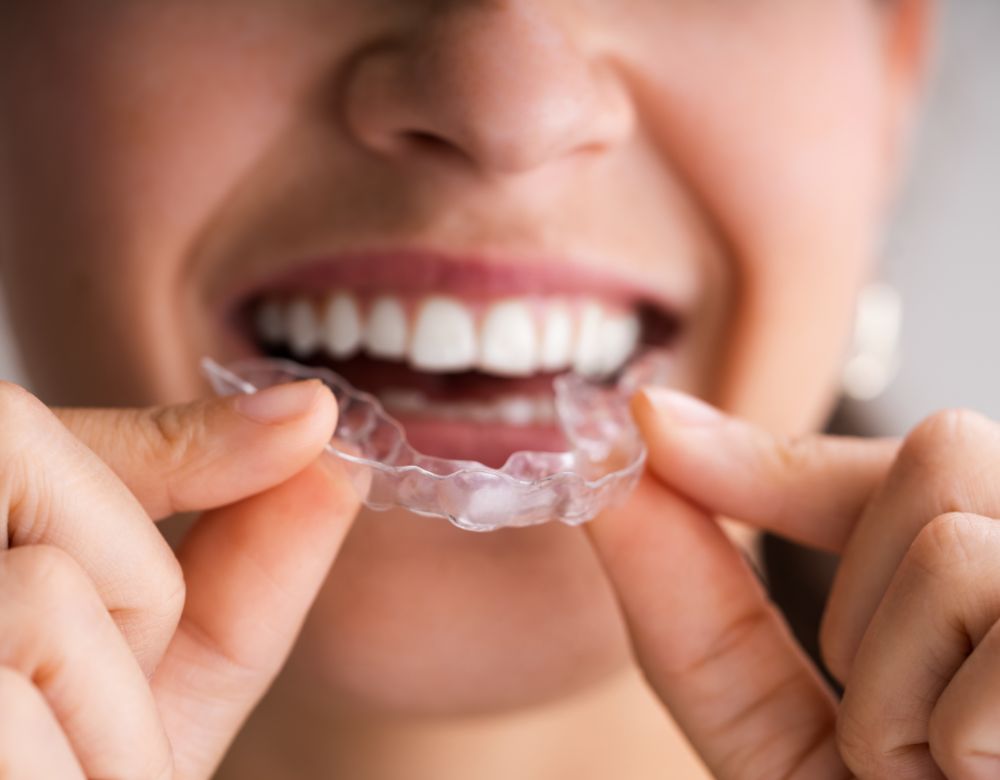
We offer custom made mouth guards that can be used at night to protect your teeth and reduce strain to your TMJ. We also offer splints that can be used during the day to provide a barrier between top and bottom teeth.
Mouth guards are custom-made to fit your teeth, so they’ll be more comfortable and effective. We’ll take impressions of your teeth, then send them off to our lab where they’ll be crafted into a perfect fit for you.
Mouth guards provide protection between your upper and lower teeth, which can help reduce strain on your temporomandibular joint (TMJ). They’ll also help protect against cracking and chipping of your teeth.
Splints are worn during the day and put pressure on the upper and lower teeth so they don’t touch. Splints minimize strain on the TMJ joints in your jaw, which may help reduce headaches caused by bruxism.